



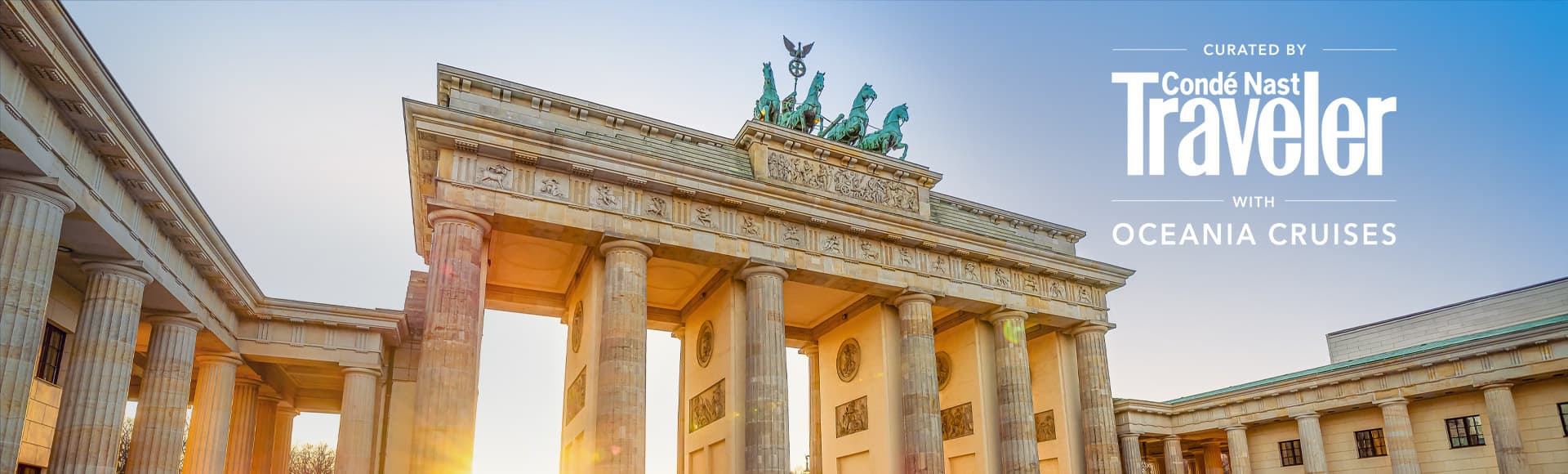
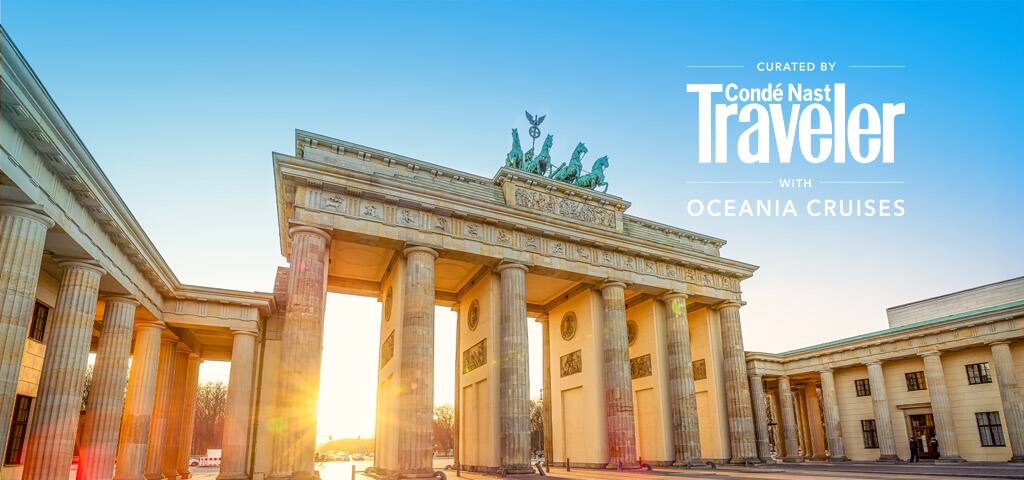

Berlin, Germany
Berlin, Germany
Trace Hanseatic history and marine wonders in Stralsund
Germany’s Baltic Coast may be thick with UNESCO sites, but Stralsund—about an hour’s drive from Warnemünde—is the standout. Like nearby Wismar and Lübeck, it was part of the thriving Hanseatic League, the medieval trading network that connected this region, and many of its redbrick merchants’ houses still stand, their stepped gables built for storing goods. The town’s maritime past surfaces in surprising ways: a fin whale skeleton, its massive skull shaped like a bony tulip, hangs from the vaulted roof of St. Catherine’s Convent; a penguin colony roosts atop the Ozeaneum aquarium. Before returning to port, pause for soused herring tartar at Restaurant Zum Scheele, a former merchant’s home on the harbor.
Discover palaces, parks, and pre-war charm in Charlottenburg
It’s easy to stereotype Berlin as the wide-awake clubbing city of its eastern neighborhoods, gyrating to a soundtrack of techno and overcast by the dark shadows of the 20th century. But head west to Charlottenburg and you’ll find a different landscape—almost Parisian in its lightness—characterized by broad boulevards, leafy parks and lakes, and some of the city’s most beautiful architecture. Take a walking or cycling tour of Charlottenburg and you may chance upon the rococo townhouses of Fasanenstrasse, the tree-cloaked grounds of the baroque Charlottenburg Palace, or the high-gabled Altbau mansions of Suarezstrasse, where antique shops line the streets below. It’s not hard to imagine how life was before the war—even more so at Villa Oppenheim, once the summer home of the Jewish-German Mendelssohn and Oppenheim families and now a delightfully elegant museum that brings the neighborhood’s history to life. Free Berlin can craft an individual cycling tour around Charlottenburg for you, Free Tours by Foot has mapped out a self-guided tour around some of the main landmarks, and Get Your Guide has a guided walking tour with a local expert. Or simply go it alone, starting at Berlin-Charlottenburg station.
Eat farm-to-table in a 19th-century apothecary
Berlin excels at reimagining historic spaces, and nowhere demonstrates that better than Ora. Housed in what was once the Oranien Apotheke—Berlin’s oldest pharmacy, opened in 1860—he restaurant in central Kreuzberg survived both World War II and the Cold War. A neon sign still hangs outside and much of the interior remains intact: original wooden cabinets, display cases, glass pill pots. Light filters through Art Deco windows, while a portrait of founder Dr. Rudolph Kade peers down from a wall. Instead of medicine, the team prescribes cocktails (try the Farmercy Martini) and dishes spotlighting produce from the regenerative Michelberger Farm: think chanterelles on toast with white currants and ricotta, or fregola with eggplant and red pepper.